Gas Furnace vs. Heat Pump: Key Differences

Gas Furnace vs. Heat Pump: Key Differences

1. System Comparison

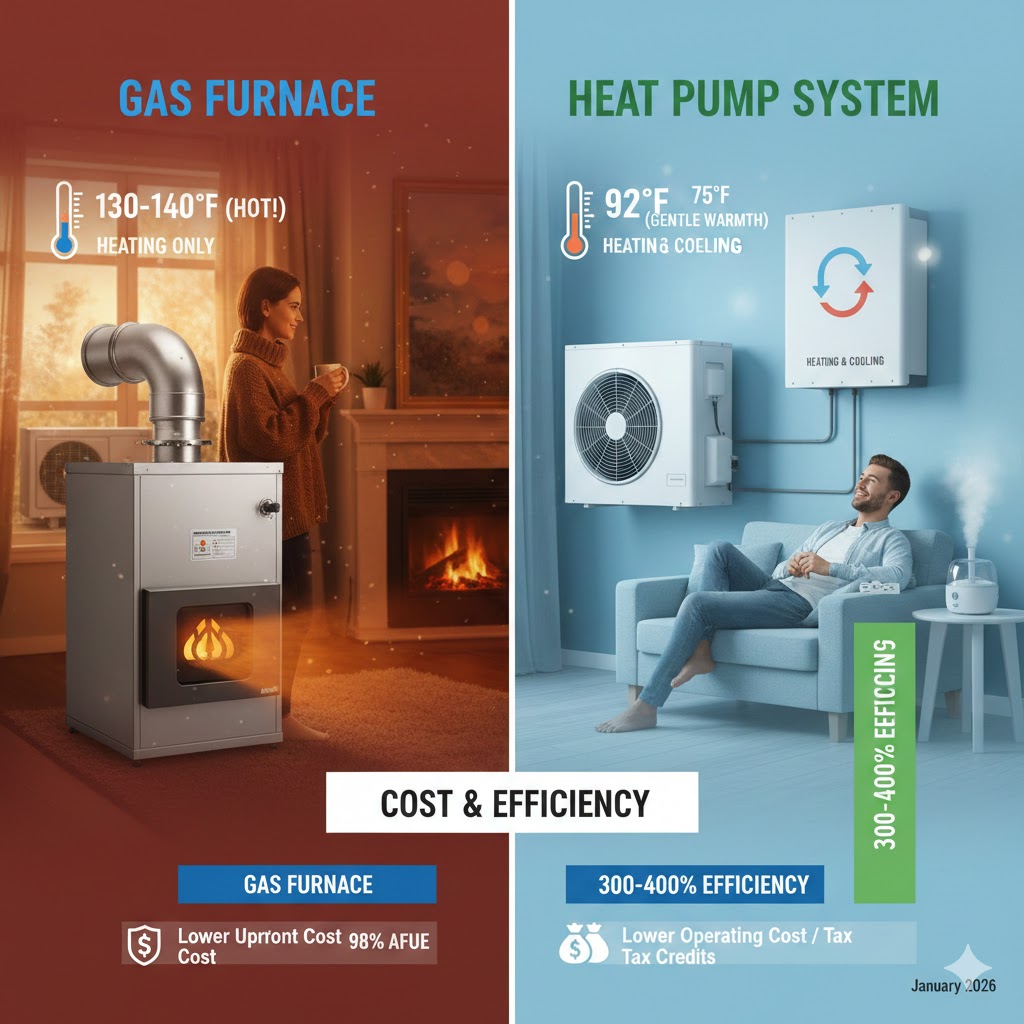
Feature Gas Furnace Heat Pump System
How it Works Generates heat by burning natural gas or propane. Transfers heat using electricity and a refrigeration cycle (reverse cooling).
Capabilities Heating only; requires a separate AC unit for cooling. Dual-purpose: Provides both heating in winter and cooling in summer.
Air Temperature Produces intense, hot air (130–140°F) for rapid heating. Produces gentler, warm air (~92°F) for constant, steady warmth.
Climate Fit Very effective in extreme cold and freezing temperatures. Best for mild to moderate climates; cold-climate models work in sub-zero temps.
Air Quality Tends to produce dry air (can cause dry skin/static). Circulates naturally humid air for better indoor comfort levels.

2. Cost and Efficiency

Energy Efficiency

  • Heat Pumps: Highly efficient, moving up to 3x more heat energy than the electricity consumed (300–400% efficiency in optimal conditions).

  • Gas Furnaces: Maximum efficiency tops out around 98.5% AFUE (Annual Fuel Utilization Efficiency).

Operating Costs

  • Heat Pumps: Generally lower costs in milder climates.

  • Gas Furnaces: May be cheaper to run if natural gas is significantly less expensive than electricity, or in extreme cold where heat pumps require backup heating.

Upfront Costs

  • Gas Furnaces: Usually have a lower initial purchase and installation cost, especially if the home is already equipped with gas lines and ductwork.

  • Heat Pumps: Higher initial investment, though often offset by year-round utility savings and potential tax credits.

Summary Note

If you live in an area with harsh winters and cheap natural gas, a Gas Furnace is a traditional powerhouse. However, for those seeking an all-in-one, high-efficiency solution for moderate climates, a Heat Pump is the modern standard.