Understanding Indoor Air Quality (IAQ) in Southern California Homes

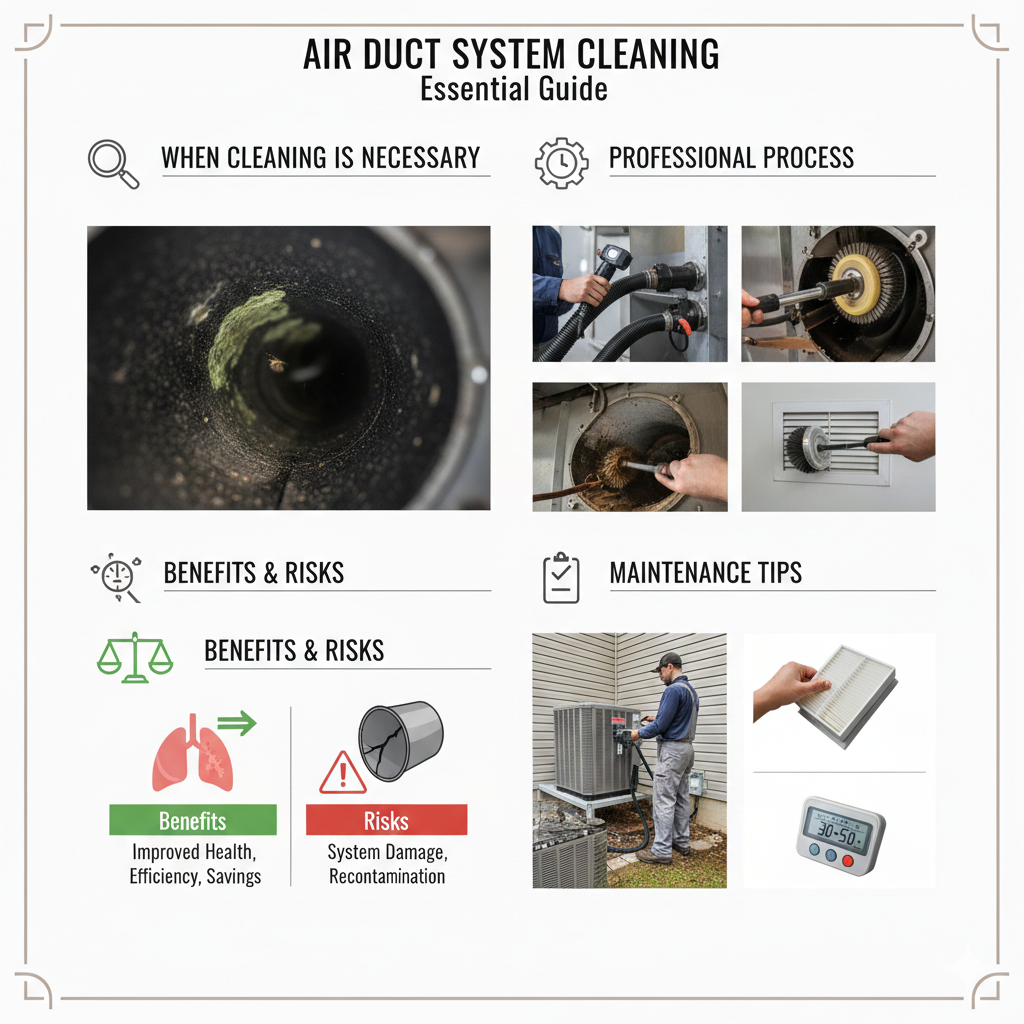
Industry experts agree that cleaning is imperative if you observe any of the following:
Visible Mold: Substantial mold growth on the inside surfaces of ducts or other HVAC components.
Vermin Infestation: Presence of rodents or insects (droppings and dander create unhealthy environments).
Excessive Clogging: Ducts are so clogged with dust and debris that particles are being released from the registers.
Recent Renovations: Significant construction dust or debris entered the system during home improvements.
A thorough cleaning must address the entire system, not just the ducts, to prevent immediate recontamination.
Inspection: Technicians use specialized cameras to identify problem areas.
Negative Pressure: A powerful vacuum is attached to ensure dislodged particles do not escape into the home.
Agitation: Specialized brushes and air whips are used to loosen stuck debris.
Full System Clean: Includes registers, grills, heat exchangers, and cooling coils.
| Benefits | Risks & Warnings |
| Airflow: Improves overall system airflow. | Damage: Improper cleaning can damage fragile ductwork. |
| Efficiency: May save 20-30% on energy bills. | Contamination: Poor techniques can spread pollutants. |
| Health: Reduces allergens for those with respiratory issues. | Scams: Avoid "blow-and-go" companies; typical rates are $450–$1,000. |
To keep your system clean and functioning efficiently:
Change Filters Regularly: Replace filters every 30 to 90 days to keep dust out.
Annual Servicing: Schedule a yearly inspection with a qualified HVAC contractor.
Control Humidity: Maintain indoor humidity between 30% and 50% to prevent mold growth.