
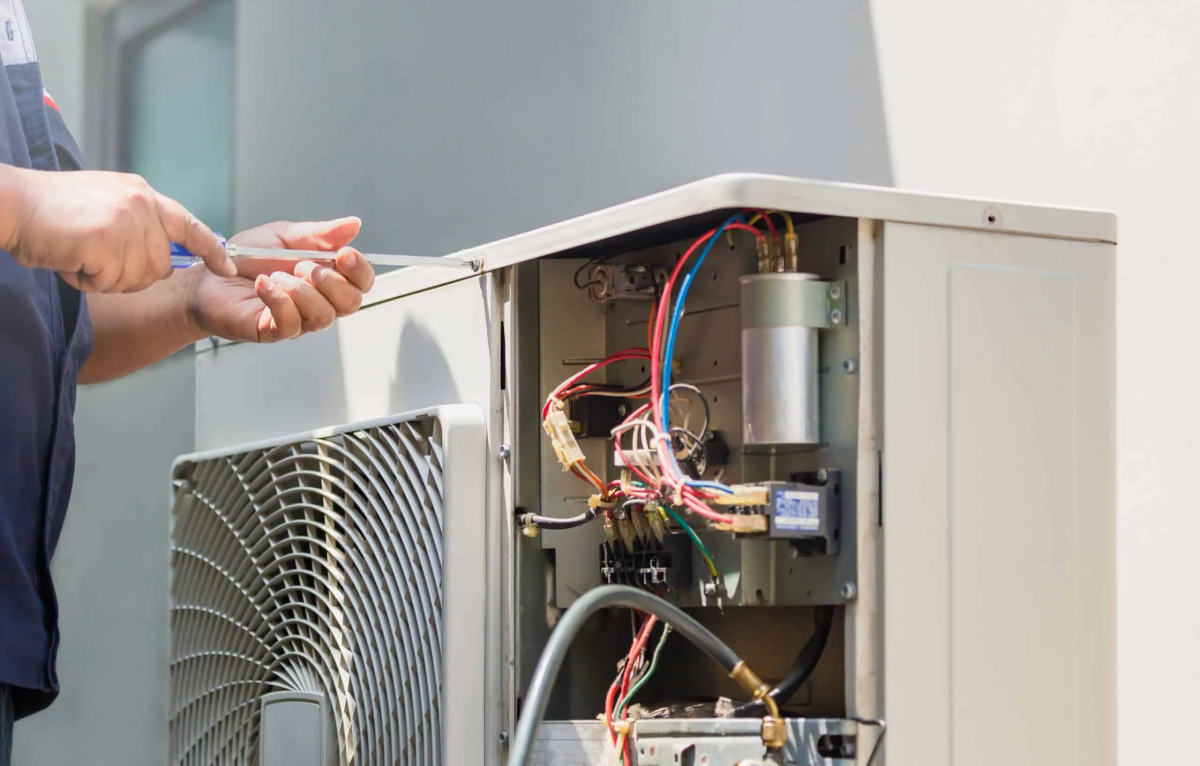
Furnace Installation Process
-
Site prep & safety
-
Shut off gas, power, and thermostat
-
Protect floors and work area
-
Remove old furnace
-
Disconnect gas line, venting, electrical, and duct connections
-
Remove furnace safely
-
Plenum fabrication & installation
-
Build supply plenum (metal box on top of furnace)
-
Build return plenum (air coming back to furnace, if needed)
-
Seal all joints with mastic/tape to prevent air leaks
-
Ensure correct airflow size and transitions to existing ductwork
-
Set new furnace
-
Level furnace and secure in place
-
Connect to supply and return plenum
-
Gas & venting
-
Connect gas line with shutoff and drip leg
-
Install flue or PVC venting (depends on furnace type)
-
Test for gas leaks
-
Electrical & controls
-
Connect power and ground
-
Wire thermostat and safety switches
-
Condensate drain (high-efficiency furnaces)
-
Install drain trap and tubing
-
Route to proper drain location
AC Installation Process
-
Indoor coil (evaporator coil)
-
Install coil above the furnace inside the plenum
-
Seal coil cabinet tightly to prevent air loss
-
Ensure correct airflow direction
-
Outdoor condenser
-
Place condenser on concrete or composite pad
-
Level and secure unit
-
Maintain proper clearances
-
Refrigerant line set
-
Run copper suction and liquid lines
-
Insulate suction line
-
Braze connections with nitrogen to prevent contamination
-
Condensate drain
-
Install drain line from coil
-
Add safety float switch (recommended)
-
Electrical
-
Install disconnect box near condenser
-
Run high-voltage and low-voltage wiring
-
Vacuum & refrigerant charge
-
Pull deep vacuum to remove moisture
-
Charge system with refrigerant per manufacturer specs
-
Thermostat setup
-
Install or program thermostat
-
Set up cooling stages if applicable
Final Steps (Both Systems)
-
Seal duct connections and plenums
-
Check airflow (CFM) and temperature split
-
Test heating, cooling, and safety controls
-
Verify proper plenum sizing and airflow balance
-
Clean work area and explain system operation